Maker Spotlight: The Potter Behind Our Stoneware
15 July 2026
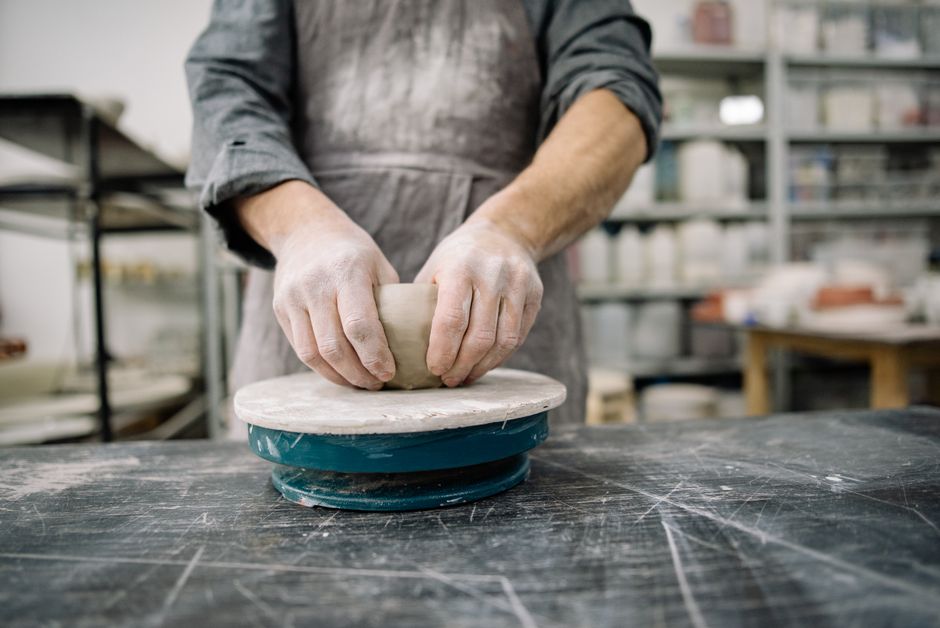
Every mug in our stoneware range starts on a wheel, in a small workshop about forty minutes from the shop. We sat down with the potter behind it to ask about the work, the wonky ones, and why "handmade" gets used too loosely.
How did you end up throwing pots for a living?
Badly, and slowly, if I'm honest. I did an evening class almost a decade ago because a friend dragged me along, and I was terrible at it for about two years. Centring the clay is the first thing you learn and the last thing you actually get good at. There wasn't a single moment where it clicked — it was more that I kept showing up long after most people in that class had stopped.
What does "handmade" actually mean, in practice, for one of our mugs?
It means I've touched the clay at every single stage — weighing it, centring it, pulling the wall up, shaping the handle separately and attaching it wet, trimming the base once it's leather-hard, then glazing and loading the kiln myself. Nothing is slip-cast or moulded. It also means every mug is very slightly different — not as a marketing line, but because a wheel genuinely doesn't produce identical objects the way a mould does.
Do the "imperfections" bother you?
Less and less. Early on I'd have thrown away a mug with a slightly uneven rim. Now I think that's often the best evidence it was actually made by hand rather than described as such. I do still bin genuine faults — cracks, glaze pooling that will trap water, anything that won't function properly as a mug. But a bit of asymmetry stays.
What's the actual failure rate?
Somewhere around one in six doesn't make it to the shop, mostly lost at the glaze-firing stage rather than on the wheel. Glaze is the least predictable part of the whole process — you're essentially trusting chemistry inside a 1,280°C kiln you can't see into.
What should someone look for in a good handmade mug?
Pick it up before you look at it. A good weight and a handle that actually fits your fingers matter more than how it photographs. And check the base — a proper trimmed foot tells you more about the maker's skill than the glaze does.
You'll find her stoneware mugs, along with pieces from a handful of other small workshops, in the shop and online.